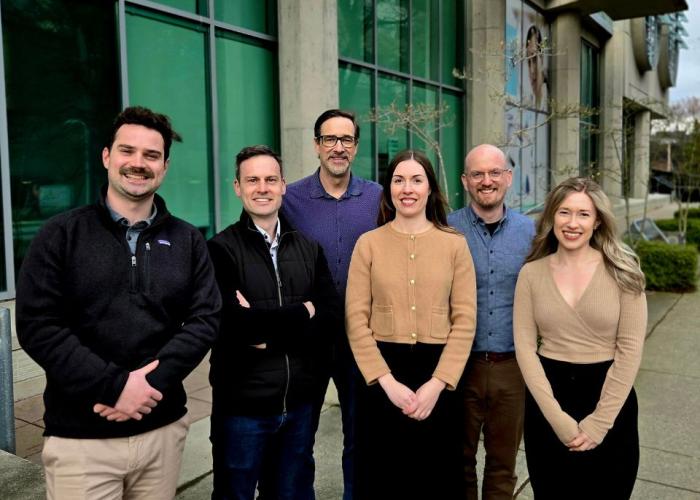
Researchers at BC Cancer Research Institute, led by Dr. Bernie Eigl, director of the Provincial Clinical Trials Office, and Dr. Alex Wyatt, senior scientist and scientific director of the Cancer Genetics and Genomics Laboratory, examined whether a blood test that analyzes cancer-derived DNA found in the blood, called circulating tumour DNA (ctDNA), could help identify more patients with metastatic urothelial carcinoma – an aggressive form of bladder cancer – who are eligible for FGFR-targeted therapy. FGFR-targeted therapy is a precision cancer treatment that targets the cellular pathways that enable the growth of cancer cells.
The study, published in Nature Communications, compares the blood-based ctDNA test with standard tumour tissue testing to detect FGFR alterations that determine eligibility for treatments such as erdafitinib. The paper shows that ctDNA testing performs strongly alongside tissue testing and may help identify additional patients who could benefit from FGFR-targeted therapies. This project represents a strong pan-Canadian collaboration, involving researchers from 12 hospitals across multiple provinces.
One of the study’s co-first authors, PhD student Andrew Murtha, is supported by a BC Cancer Rising Star Award through the BC Cancer Foundation, which also helped fund this research study.
Urothelial cancer is difficult to treat, and identifying FGFR alterations reliably is important for guiding targeted therapy. However, tumour tissue testing has limitations – a biopsy may not capture all the genetic changes across the tumour, and some samples don’t contain enough usable material for testing. Additionally, technical details of testing methods can vary between hospitals.
“The current clinical standard-of-care is to test cancer tissue obtained near the time of first cancer diagnosis – but cancer can change over time and suitable tissue may not be available,” says Dr. Wyatt. “Testing a recent ctDNA sample gives us a chance to pick up actionable changes that were not detected in the original cancer tissue.”
In this prospective, multi-centre study, the team evaluated 208 patients undergoing routine FGFR tissue testing. They found that the blood-based ctDNA testing matched tissue results 90% of the time and detected FGFR alterations in 26% of patients, equaling the frequency observed in tissue. Notably, the ctDNA test identified seven additional patients with FGFR alterations that tissue testing missed, likely reflecting tumour heterogeneity or tissue limitations. Serial blood collections also showed that ctDNA can provide ongoing insight into tumour changes in a practical and minimally invasive way.
“Identifying FGFR alterations via ctDNA when tissue testing failed to demonstrate an alteration means we can provide active therapies that patients could otherwise not access,” explains Dr. Eigl. “In FGFR-positive patients, these treatments have a meaningful impact on survival.”
Among the 21 patients who received erdafitinib after testing, the median progression-free survival was 7.5 months. One patient whose FGFR alteration was detected only through the blood-based ctDNA test remained on treatment for 33 months, highlighting the potential clinical value of ctDNA testing to identify patients who may benefit from targeted therapy.
These findings suggest that integrating ctDNA with tissue-based approaches may expand access to FGFR-targeted therapies and provide a more complete genomic picture of patients with metastatic urothelial cancer. The team is now working to expand access to routine clinical ctDNA testing through the Cancer Genetics and Genomics Laboratory. The next step is to make a clinical-grade version of their home-grown ctDNA test available to all patients with metastatic urothelial cancer in BC.